







Merchant services are the full set of tools you use to accept payments, and payment processing is the sequence of steps that authorizes each transaction and moves the money. This guide covers how they fit together, whether you need both, and what to look for when you’re choosing who to work with.
Key Takeaways
- Merchant services is the full set of tools, hardware, software, and support a business uses to accept electronic payments.
- Payment processing is the specific set of steps, from authorization through settlement, that a payment processor handles.
- Most businesses accepting modern electronic payments need both, and both can come from a single provider.
- The real decision isn’t one or the other. It’s finding the right fit on pricing, support, and the payment tools your business actually uses.
Merchant Services vs. Payment Processing: The Short Answer
Merchant services is the broad ecosystem of tools, hardware, software, and support a business uses to accept payments. Payment processing is the specific set of steps that authorizes a transaction and moves the money into your account. Put simply, merchant services is what you use to take a payment, and payment processing is what happens once you do. The two work together, and one company can provide both.
| Merchant services | Payment processing | |
| What it is | The full set of tools and support a business uses to accept electronic payments | The sequence of steps that authorizes a transaction and settles funds. |
| What it includes | Point of sale (POS) hardware, payment gateways, Tap to Pay and contactless tools, virtual terminals, invoicing, reporting, and merchant support. | Authorization, authentication (verification), clearing, settlement, security monitoring, and funding. |
| Who provides it | A merchant services provider. | A payment processor, often working with an acquiring bank. |
| When you need it | As soon as you want to accept payments beyond cash and checks. | Every time a customer pays by card, digital wallet, or electronic check. |
To understand why most businesses end up with both, it’s worth looking at each one more closely.
What Are Merchant Services?
Merchant services is the umbrella term for everything a business uses to accept and process electronic payments. It covers point-of-sale hardware on your counter, payment gateways on your website, Tap to Pay and contactless tools on a phone or handheld, and virtual terminals for keyed-in transactions. Add invoicing, reporting, and support, and you have everything needed to keep it running.
A merchant services provider (MSP) is the company that supplies and supports those tools. They set you up, get you approved, connect your account to the processing side, and handle the questions that come up once you’re live. A good provider is less a vendor than a working partner, since payments touch every sale your business makes.
What that looks like in practice depends on how you sell. A restaurant might run a countertop terminal and handheld devices for tableside checkout. A field services company might take a card on a phone at the customer’s door with Tap to Pay, or send a payment link before the crew leaves. A B2B supplier might key in invoices via a virtual terminal and allow customers to pay by QR code. Merchant services aren’t uniform—they’re tailored to the merchant.
What Is Payment Processing?
Payment processing is the sequence of steps that authenticates a transaction, approves it, and moves funds from your customer’s account into yours. It happens in the background every time someone pays you by card, usually in a couple of seconds.
Recently released research from the Federal Reserve indicates that cards now account for roughly four out of every five noncash payments in the United States, with 187.7 billion card transactions in 2024. Payment processing is the machinery behind nearly all of them.
Here’s how a card payment works, start to finish:
- Authorization. Your customer taps, dips, swipes, or enters their card details. The transaction data leaves your terminal or gateway and heads to the processor.
- Authentication or verification. The processor routes the request through the card network to the customer’s issuing bank, which verifies that the card is valid and that the available credit or funds will cover the charge.
- Approval. The issuing bank sends an approval or a decline back along the same path. Your terminal displays the result, and the sale completes.
- Clearing. At the end of the day, you batch out your approved transactions. The processor submits them through the card networks, so each issuing bank knows what it owes.
- Settlement and funding. The issuing banks release the funds, your acquiring bank receives them, and the money lands in your business bank account, typically within one to two business days.
Your payment processor, also called a credit card processor, runs those steps. It transmits data between your customer’s bank and yours, manages approvals and declines, monitors for fraud and validity issues, and handles the funding that puts money in your account. Bank transfer methods like ACH follow a similar path on a separate network.
How the Pieces Fit: Processor, Gateway, Merchant Account & Acquirer
Payments involve more moving parts than most business owners expect. Here’s what each piece actually does:
- Payment processor: The center of the transaction. It moves data between your business, the card networks, and the banks—and gets the payment approved, cleared, and settled.
- Payment gateway: Usually, the entry point when there’s no physical card. A payment gateway captures and encrypts card details either online or at a virtual terminal, then passes them to the processor.
- Merchant account: The destination for settled funds. Money from card sales lands here before moving into your business bank account.
- Acquiring bank: The institution behind the merchant account. It enables you to accept card payments and receive settled funds on your behalf.
In practice, they run in a chain: the gateway or terminal captures the payment, the processor approves and settles it, the acquiring bank receives the funds, and the merchant account holds them until they reach your business bank account.
Do you still need a dedicated merchant account?
You need somewhere for card funds to land before they reach your bank. The real question is whether that account is in your business’s name or in a payment aggregator’s name.
A dedicated merchant account belongs to your business alone. The alternative, offered by a payment facilitator or aggregator, places your business within a larger shared account owned by the provider.
Shared accounts are quicker to open. Dedicated accounts require upfront underwriting and offer real advantages once you’re running: business-specific pricing, greater account stability, and room to negotiate as your volume grows. Ask any provider which one you’d be getting, because it isn’t always spelled out.
Do You Need Both a Merchant Services Provider and a Payment Processor?
The short answer is yes, you need both. The more useful answer is that you can get both from one company (and for most businesses, that’s the simpler route).
Every card payment your business takes requires tools on your end and processing behind it. Those are two functions, not two shopping trips. Plenty of providers offer both, so the practical decision isn’t “merchant services or payment processing”; it’s “one partner or several.”
Going with several has a cost. Separate vendors mean separate contracts and separate statements, and when a payment fails, support becomes your job to coordinate between companies that don’t answer to each other. One provider means one statement, one number to call, and clear accountability when something goes wrong.
What Does It Cost? Merchant Services vs. Payment Processing Fees
There’s no set fee for merchant services and payment processing. With merchant services, pricing varies by provider and the tools you need (such as handheld devices, POS software, etc.). Payment processing prices also vary by provider, pricing model, and your business’s risk profile.
Let’s explore some of the fees in more detail (and who charges them):
| Fee name | Who charges it | Negotiable? |
| Interchange | Set by the card networks, paid to your customer’s bank | No |
| Assessments | Card networks | No |
| Processor markup | Payment processor | Yes |
| Gateway and hardware fees | Merchant services provider | Sometimes |
| Monthly account and statement fees | Merchant services provider or payment processor | Sometimes |
| Chargeback fees | Merchant services provider or payment processor | Sometimes |
Most of what you pay isn’t up to your provider. The card networks publish interchange rates, and an identical transaction costs the same, no matter who processes it. Assessments work the same way. What varies between quotes is the markup your provider adds to interchange rates and the fees attached to tools, support, and account maintenance.
It’s critical to compare the pricing components that aren’t set in stone, and those are easier to compare when a single provider itemizes everything for you. Kurv prices in tiers based on risk profile and offers dual pricing options, with the full cost laid out at signup rather than surfacing later. If you want additional information on pricing and how it impacts your business, check out our guides on pricing models and credit card processing fees.
How to Choose the Right Partner for Your Business
There’s no single best provider, only the one that fits how your business operates. Before you compare rates, get clear on where your customers pay you: at a counter, at their door, over the phone, or after the job is done. That answer narrows the field faster than any feature list.
From there, ask:
- How is the pricing structured, and which parts are yours? You want the markup broken out from interchange and assessments.
- How fast is approval? Same-day onboarding is realistic for many low-risk businesses.
- What hardware and software come with it? Terminals, handhelds, Tap to Pay on a phone, virtual terminal, invoicing, and QR codes.
- Does it support the way I sell now and the way I might sell next year? Adding a second location or a mobile crew shouldn’t mean switching providers.
- How is PCI compliance handled, and is there a fee for it? Providers differ on how much they do for you and whether they bill separately for it.
- What does support look like in practice? Hours, channels, and whether you get a person or a queue.
Security, PCI compliance, & fraud protection
Accepting cards means handling data that criminals want. This unfortunate reality means businesses must meet industry security requirements to protect their customers. The Payment Card Industry Data Security Standard (PCI DSS) sets the requirements that every business taking card payments must meet, scaled to the way you process and the volume you handle.
Most small businesses aren’t equipped to interpret PCI DSS requirements on their own, which is why the provider’s role matters. A good one tells you which validation level applies to you, walks you through the annual questionnaire, and flags anything in your setup that puts you out of scope. A weak one sends a link and charges you a non-compliance fee when you miss the deadline.
Fraud and chargeback prevention sit alongside compliance. Look for a provider that monitors transactions for suspicious patterns, alerts you before problems compound, and helps you respond to disputes rather than passing them through. Falling behind on either front gets expensive: fines, held funds, higher processing costs, and in serious cases, the complete loss of your ability to accept credit card payments.
Why Businesses Choose Kurv for Both
Kurv provides merchant services and payment processing under one roof, which means one application, one statement, and one team accountable for all your payment solutions. There are no complicated vendor integrations, and no arguing over whose problem a failed transaction is.
Onboarding is mostly self-serve, and many low-risk businesses are approved automatically and take payments the next day. Pricing is tiered by risk profile, with dual pricing available, and full details are laid out before you sign rather than discovered later.
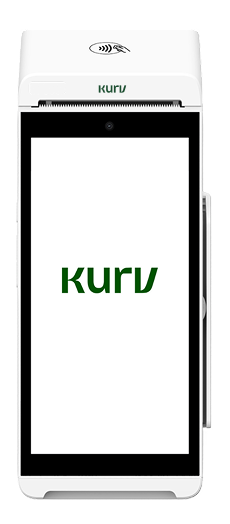
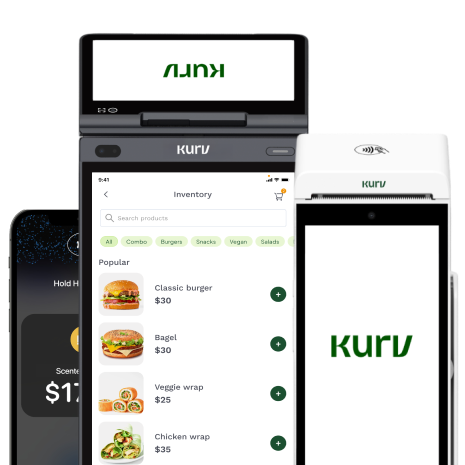
On the tools side, Tap to Pay, QR payments, and a virtual terminal come free, alongside point-of-sale hardware built for counters, tables, and driveways alike. The merchant portal and mobile app give you visibility into every transaction, with fraud and chargeback prevention running in the background. And when you need help from an expert, live support is available around the clock!
Ready to Grow Your Business?
Apply and start accepting payments within a day

Frequently Asked Questions
What is the difference between merchant services and payment processing?
Merchant services is the full ecosystem of tools and support you use to accept payments, while payment processing is the specific sequence of steps that authorizes each transaction and moves the funds into your account. Put simply, one is what you use to take a payment, and the other is what happens once you do.
Do I need both a merchant services provider and a payment processor?
Yes. Accepting cards and digital wallets requires both the tools that capture the payment and the processing that moves the money, so there’s no practical way to run one without the other. However, you don’t need to use two separate companies. Many providers offer both merchant services and payment processing under one roof, ensuring full integration between all your payment systems—and only one customer support contract.
What’s the difference between a payment processor, a payment gateway, and a merchant account?
A payment processor moves transaction data between your business, the card networks, and the banks so a payment can be approved and settled. A payment gateway captures and encrypts card details when the card isn’t physically present, such as online checkout or a virtual terminal, then passes them to the processor. A merchant account is where funds from card sales land before moving into your business bank account. They work in sequence rather than as alternatives, so it’s normal for a business to use all three.
How do merchant services fees compare to payment processing fees?
They usually arrive together, which is why they’re hard to separate on a statement. Processing costs include interchange and assessments, both set by the card networks and identical no matter who you sign with, plus your provider’s markup. Merchant services costs cover the tools and support around them: gateway access, hardware, account maintenance, and dispute handling. Bundling both with one provider tends to make the total clearer, since you’re reading one bill instead of reconciling two.
Which option is better for in-person or on-the-go businesses?
You need both regardless, so the useful comparison is between providers rather than between the two terms. Businesses selling at a fixed location tend to prioritize reliable countertop or handheld hardware and fast checkout. Businesses working off-site tend to prioritize contactless acceptance, QR codes, payment links, and a virtual terminal for keyed-in transactions. Ask what’s standard for your business type before signing, since these tools are sometimes optional extras.

