







Determining the best credit card reader for Android depends on your specific business, like your monthly volume and industry type. Square wins for new, low-volume sellers; Payanywhere 3-in-1 wins for budget and micro-businesses; SwipeSimple B250 paired with a real merchant account wins for established $5K+/mo merchants; and Helcim wins for high-volume sellers at $10K+/mo.
The bigger decision is not which reader to buy, but which processor to choose. That relationship affects your fees, cash flow, funding stability, and long-term margins.
In this guide, we’ll cover: the 7 best Android card readers ranked by volume fit, how to choose the best one, what you’ll actually pay, and the PSP and merchant account comparison most guides skip.
Key Takeaways
- The best Android credit card reader depends on monthly volume and industry, not hardware price. Square is a strong fit for new sellers, SwipeSimple B250 for established businesses, and Helcim for higher-volume merchants.
- Choosing a reader really means choosing a processor. The device is the easy part; the processing relationship determines your margins, cash flow stability, and long-term support experience.
- PSP-based readers (Square, PayPal, SumUp) trade account stability for convenience, while merchant-account-based options (Helcim, or Payanywhere/SwipeSimple paired with a Kurv merchant account) offer stability and lower rates at higher volumes.
- Tap to Pay on Android lets merchants accept contactless payments without any hardware purchase — Kurv offers it free with every merchant account.
- Fee transparency matters: flat-rate pricing looks simple, but it typically costs more than tiered or interchange-plus pricing once you reach $5K/month in volume.
The 7 Best Credit Card Readers for Android in 2026
Before choosing the best credit card reader for Android, here’s a quick overview of the main options. This roundup covers 7 readers that most US merchants are considering right now. Rather than ranking readers, we’ll help match each option to the merchants it’s designed to serve.
| Product | Price | Processing Rate | Monthly Fee | PSP or Merchant Account | Best For |
| SumUp Plus | $54 | 2.6% + $0.10 | None | PSP | Very low-volume sellers |
| Payanywhere 3-in-1 Reader | $77.95 | 2.69% | None | PSP or merchant account through Kurv | Micro-businesses |
| Square Reader for Contactless & Chip | $59 | 2.6% + $0.15 | None | PSP | New businesses |
| PayPal Zettle Card Reader | $29 | 2.29% + $0.09 | None | PSP | PayPal users |
| Clover Go | $49 | 2.6% + $0.10 | $0–$14.95 | Merchant account | Clover POS users |
| SwipeSimple B250 | $109–$150 | 2.6 + $0.10, custom pricing available | None | Merchant account through Kurv | Countertop businesses |
| Helcim Card Reader | $199 | Interchange-plus pricing; rates start around 1.79% + $0.08 | None | Merchant account | $10K+/month merchants |
1. SumUp Plus — Best For the Smallest, Lowest-Volume Sellers
SumUp is built for the smallest sellers. Think hobbyists, occasional market vendors, or very new businesses still testing demand, i.e., small average tickets and very low monthly volume.
- Price: $54 (SumUp Plus); $99 (SumUp Solo)
- Fees: 2.6% + $0.10 per in-person transaction
- Processor: PSP
- Pros: Low upfront cost, no monthly fee, simple onboarding
- Cons: Limited reporting and POS features, account stability risk typical of PSPs
Skip it if: You need inventory, reporting, or room to grow.
2. Payanywhere 3-in-1 Reader — Best For Small Mobile Businesses on a Tight Budget
The Payanywhere 3-in-1 Reader is a strong fit for micro-businesses, mobile sellers, and service providers that want chip, tap, and magstripe support without spending heavily on hardware.
- Price: $77.95
- Fees: 2.69% per in-person transaction, or custom tiered or interchange-plus pricing available when paired with a Kurv merchant account
- Processor: PSP by default (Payanywhere/North); merchant account option available through Kurv, which removes the PSP funds-hold risk for higher-volume merchants.
- Pros: Affordable hardware, supports chip/tap/magstripe payments, virtual terminal support, multi-user access, Bluetooth connectivity
- Cons: Flat-rate pricing can get expensive at higher volume, no built-in printer, and it requires a compatible processing app
Skip it if: You process high monthly volume and would benefit more from interchange-plus or merchant account pricing.
3. Square Reader for Contactless and Chip — Best For New or Very Low-Volume Merchants
Square is a common first choice for Android merchants thanks to its easy setup, flat-rate pricing, and no monthly fee. It’s ideal for businesses processing under $5K/month.
- Price: $59 (Contactless and Chip)
- Fees: 2.6% + $0.15 per in-person transaction
- Processor: PSP
- Connector: Bluetooth (Contactless and Chip); Magstripe variant uses 3.5mm audio jack or USB-C, depending on version.
- Pros: Free magstripe reader option, fast onboarding, strong mobile POS app, supports offline payments during short connectivity outages, deep ecosystem (retail, restaurants, appointments, online sales).
- Cons: Flat-rate pricing becomes expensive above $5K–$10K/month; merchant account instability, fund holds, and account shutdowns can occur without warning; the reader only works with Square (you cannot switch processors).
Skip it if: You are an established merchant processing over 5k per month who needs a predictable cash flow.
4. PayPal Card Reader (Zettle) — Best for PayPal Ecosystem Users
Zettle makes sense if you already rely on PayPal for online payments and want in-person parity.
- Price: $29 first reader, $79 additional
- Fees: 2.29% + $0.09 per in-person transaction
- Processor: PSP
- Pros: Lower in-person rate than Square, same-day funding to PayPal account, built-in PIN pad
- Cons: Fund-hold risk, weaker POS ecosystem, virtual terminal costs extra ($30)
Skip it if: You do not already use PayPal or cannot risk potential fund holds.
5. Clover Go — Best for Merchants Already Using Clover POS
Clover Go works best as an add-on for existing merchants using Clover Station or Clover Mini, aiming for mobile acceptance that syncs across devices.
- Price: $49 direct from Clover (often bundled at ~$199 with Clover ecosystem).
- Fees: 2.3%-2.6% + $0.10 per in-person transaction (varies by reseller); some plans have monthly fees up to $14.95.
- Processor: Merchant account (Fiserv)
- Pros: Syncs with Clover ecosystem, merchant account stability, good reporting; supports Tap to Pay; integrates with QuickBooks and Xero; 24/7 customer support.
- Cons: Pricing varies widely through resellers; contracts and termination fees are common; needs internet connectivity for real-time processing.
Skip it if: You are not already using Clover or are unsure who is selling/supporting your account.
6. SwipeSimple B250 — Best For Established Small Businesses Wanting a Real Merchant Account
SwipeSimple B250 is a strong option for established small businesses seeking greater account stability than PSP-based readers typically offer. One thing that sets this reader apart is that, depending on your payment processor, it can be paired with a merchant account. It also works well for food trucks, market vendors, mobile merchants, and service providers that need portable payment acceptance with Bluetooth connectivity.
- Price: $109–$150
- Fees: 2.6 + $0.10 per in-person transaction, custom pricing varies by reseller; transparent tiered or interchange-plus pricing available through Kurv merchant accounts
- Processor: Full merchant account; available through resellers, including Kurv, which resells this reader paired with its own merchant account, so merchants get transparent tiered pricing by risk profile, dual pricing option, and no PSP-style fund holds
- Pros: Merchant account stability, long battery life, compact design, card-on-file support, Bluetooth pairing with Android devices, works with SwipeSimple dashboard and app
- Cons: No built-in printer, Bluetooth only (no USB-C plug-in), support quality depends on reseller
Skip it if: You’re a very low-volume seller or want the absolute cheapest hardware possible.
7. Helcim Card Reader — Best for High-Volume Sellers
For merchants with credit card transactions totaling over $10K/month who want interchange-plus pricing and a real merchant account, Helcim is a top pick.
- Price: $199 (Card Reader)
- Fees: Interchange-plus pricing; rates start around 1.79% + $0.08
- Processor: Merchant account
- Pros: Interchange-plus pricing, no monthly fee, strong customer support, volume discounts, accepts chip, swipe, and contactless payments
- Cons: Higher hardware cost, lighter POS ecosystem
Skip it if: You process very low volumes and would not benefit from interchange-plus pricing.
How to Choose the Right Android Card Reader for Your Business
Choosing the right Android card reader for your business needs boils down to the following decisions:
- Decision 1: Volume. If you usually process under $5K/month, flat-rate PSPs (Square, SumUp, PayPal) may be the cheapest. If you’re in the $5K–$10K crossover zone, run the math both ways. If you process over $10K/month, tiered or interchange-plus with a real merchant account (SwipeSimple B250 paired with a Kurv merchant account, or Helcim) almost always wins.
- Decision 2: Industry. Low-risk retail, skilled services, and health and wellness merchants can choose any of the 7 options. Restaurants need tip handling and table management tools, so Clover Go or Square work best. High-risk industries (CBD, firearms, adult, etc.) may struggle with approval from PSPs.
- Decision 3: Sales environment. Fully mobile businesses should get a Bluetooth reader + phone. Pop-up and market sellers can use a similar setup or a tablet. If you have a fixed countertop with an occasional mobile device, choose a Bluetooth reader and an Android tablet stand. Multi-location chain? Have smart terminals at each location, synced to a single merchant portal.
- Decision 4: Cash flow. If a two-week fund hold would hurt payroll or inventory, choose a merchant account over a PSP. Clover Go (direct), Helcim, or either of the two Kurv-resellable readers (Payanywhere 3-in-1 or SwipeSimple B250) are the picks here.
What You’ll Actually Pay: Fees, Rates, and Hidden Costs
Here’s where things get interesting — most processors’ advertised rates are only the starting point. Real processing costs usually include: transaction rate, fixed per-transaction fee, monthly software fees, hardware, chargeback fees, and sometimes monthly minimums or statement fees.
There are many different merchant account pricing models to be aware of. While flat-rate pricing (e.g., Square, SumUp, PayPal, Shopify) is simple and predictable, it tends to be expensive at scale. Kurv offers tiered pricing (through Payanywhere 3-in-1 or SwipeSimple B250) with different rates for different transaction types (e.g., swipe vs. keyed vs. rewards cards), which can be cheaper in aggregate for most merchants with monthly volume above $5K. Interchange-plus (e.g., Helcim) — the most transparent pricing model — is often the best choice for merchants processing $10K+/month, with rates that drop automatically with volume.
Here’s an example of what a merchant actually keeps on a $100 sale using each of the 7 readers.
| Product | Rate | Fixed Fee | Monthly Fee | Dual Pricing Option | Effective Cost on $100 Sale |
| Square | 2.6% | $0.15 | $0 | No | Fee $2.75 → You keep $97.25 |
| SumUp | 2.6% | $0.10 | $0 | No | Fee $2.70 → You keep $97.30 |
| PayPal Zettle | 2.29% | $0.09 | $0 | No | Fee $2.38 → You keep $97.62 |
| Helcim (avg) | ~1.79% (estimate) | $0.08 | $0 | No | Fee $1.87 → You keep $98.13 (estimate) |
| Clover Go | 2.6% | $0.10 | $0–$14.95 | No | Fee $2.70 → You keep $97.30 |
| Kurv (tiered avg) | ~1.9% | $0.08 | $0–$20 | Yes | Fee $1.98 → You keep $98.02 (≈$100 with dual pricing) |
It’s worth noting that Kurv’s dual pricing — available when Payanywhere 3-in-1 or SwipeSimple B250 is paired with a Kurv merchant account — allows you to legally pass processing costs to customers via cash discounts or surcharges. This can effectively eliminate processing costs for merchants. Note that dual pricing programs are more commonly available through traditional merchant account providers, not PSPs.
Interchange rates ultimately come from card networks like Visa and Mastercard, with supporting data published by the Federal Reserve, which is why there’s very little wiggle room. However, make sure to ask your processor about their hidden fees — PCI compliance fees, monthly minimums, early termination fees, chargeback fees, batch, statement, or gateway fees — before making a decision.
The 3 Types of Android Card Readers
Most Android credit card readers fall into three hardware categories. The right choice depends on how you sell.
- Magstripe-only readers. Cheapest (often free with signup) but swipe-only and not EMV-liability protected — best kept as a backup. Most providers no longer sell them as a primary reader.
- EMV chip + contactless (NFC) readers. The modern standard for accepting chip, tap, and mobile wallets such as Apple Pay, Google Pay, and Samsung Pay. Usually Bluetooth-enabled and priced around $29–$99.
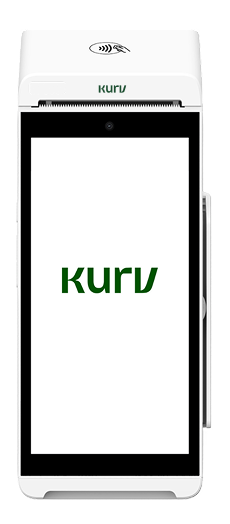
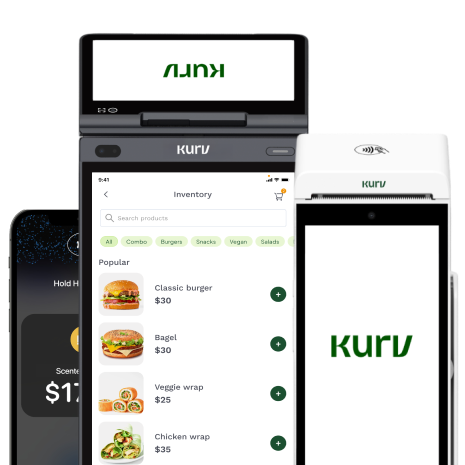
- All-in-one smart terminals. Standalone Android devices with built-in screens and readers, typically $199–$329. These are designed for merchants who want a full countertop solution. Most smart terminals run Android natively.
| Connection Type | Payment Types Supported | Price Range | Best For | Example Devices |
| Audio jack (legacy) | Swipe only | Free–$29 | Backup use only | Older magstripe readers |
| USB-C | Chip + Tap + Swipe | $29–$79 | Simple phone-paired setups | USB-C mobile readers |
| Bluetooth | Chip + Tap + Swipe | $29–$99 | Mobile and tablet use | Square Reader, PayPal Zettle, SumUp Plus |
| Built-in (smart terminal) | Chip + Tap + Swipe | $199–$329 | Countertop or fully mobile terminals | Helcim Smart Terminal |
For most modern Android phones, Bluetooth is the safest choice because it works across phones, tablets, and terminals without relying on a headphone jack or charging port.
Bluetooth vs. USB-C vs. Audio Jack — Does It Matter?
Yes, but probably less than you think. The connection type mainly affects convenience and compatibility, not processing quality.
- Bluetooth. The current standard. Bluetooth readers are the most flexible because they work with virtually any modern Android phone or tablet. They’re ideal for mobile businesses, shared devices, and merchants who want freedom to move around. The tradeoff is that the reader needs its own battery charge.
- USB-C. Simple and direct. USB-C readers plug straight into modern Android phones, so there’s no separate battery to manage or Bluetooth pairing to troubleshoot. That said, they occupy your phone’s charging port during a transaction, which can become frustrating during long shifts or busy sales periods.
- Audio jack (3.5mm). Mostly legacy hardware at this point. Very few Android phones still include a headphone jack, and swipe-only readers connected through audio ports are increasingly outdated. Unless you’re using older hardware, it’s best to avoid this category.
Quick decision rule: If your Android phone has USB-C and no headphone jack, which describes most modern devices, Bluetooth is usually the safest long-term choice.
PSP vs. Merchant Account — Why It Matters More Than the Hardware
The decision that actually affects your bottom line isn’t your hardware specs. It’s whether your processor is a payment service provider (PSP) or a merchant account provider. A PSP (Square, PayPal, SumUp, Shopify) aggregates thousands of merchants under one master account. You share that account with everyone else. On the other hand, a merchant account (Helcim, Clover-direct, or Payanywhere/SwipeSimple) when paired with a real merchant services reseller like Kurv is underwritten specifically for your business —and it belongs to you.
Why does this difference matter so much? Three main reasons:
- Cash flow. PSPs monitor transactions algorithmically. If their system flags unusual activity — a large sale, a spike in volume, a customer dispute — they can freeze your funds or pause your account with little warning and limited recourse. However, merchant accounts front-load the risk review during underwriting, so surprises after approval are rare. You have contractual protections and a defined relationship.
- Fees. PSP pricing is flat-rate. It’s simple to understand, but rarely the cheapest option once you have real volume. In contrast, merchant account providers offer tiered or interchange-plus pricing, with rates that drop as your volume grows. A $10K/month difference in processing can equate to $50–$150/month in savings.
- Support. Because PSPs scale through automation, if something goes wrong, you may have to wait days for a response from a generalized support queue. However, merchant account providers typically assign dedicated support contacts who are familiar with your account history.
Ultimately, a PSP is a good choice for first-year businesses still testing demand, for very low-volume businesses (under $3K/month), for side hustles, or for anyone who values instant signup speed over long-term stability. Any business doing consistent volume above $5K/month that can’t tolerate unpredictable fund holds, and in verticals that PSP algorithms tend to flag (restaurants with high tip percentages, services with large single transactions, B2B with irregular billing cycles) will benefit from a merchant account provider.
| Category | PSP (Square, PayPal, SumUp, Shopify) | Merchant Account (Kurv, Helcim, Clover-direct, SwipeSimple) |
| Account structure | Many businesses under one master account | Dedicated account under your business |
| Cash flow risk | Simple flat rates; rarely the cheapest long term | Upfront underwriting reduces surprise disruptions and adds contractual protections |
| Fees | Typically, more direct, dedicated support | Tiered or interchange-plus pricing that drops with volume |
| Support | Automation-led; support can vary | Established businesses, higher volume, merchants who cannot tolerate fund holds, and industries often flagged by PSP risk systems |
| Best for | First-year businesses, very low volume, side hustles, speed-focused merchants | Established businesses, higher volume, merchants who cannot tolerate fund holds, industries often flagged by PSP risk systems |
Can You Accept Credit Cards on Android Without a Reader?
Yes. Tap to Pay on Android enables merchants to accept contactless payments directly on their phones via NFC. This is often the lowest-cost way to start accepting credit cards on Android, as no additional hardware is required. Many merchants use it as a starting point before upgrading to a dedicated terminal.
Security, EMV, and PCI Compliance — What Merchants Should Actually Worry About
You do not need to become a compliance expert, but a few basics matter.
- EMV chip is mandatory: Without EMV chip support, you can be liable for fraudulent chargebacks. The EMV liability shift took effect in October 2015.
- PCI compliance is shared: Use approved hardware and apps, never store card numbers, and complete required PCI steps.
- Encryption should be standard: Ensure end-to-end encryption (E2EE) and tokenization.
- Chargeback protection: Some processors include built-in chargeback and fraud prevention, like Kurv. Others charge per dispute ($15-$25 is typical).
Still Not Sure Which Android Card Reader Is Right For You?
Choosing the right Android card reader isn’t always straightforward. Monthly volume, industry, sales environment, and processor type all play a role, which is why the biggest mistake merchants make is focusing on hardware first and the processing relationship second.
In most cases, the processor has a much bigger impact on your fees, funding stability, and long-term experience than the reader itself. If you’re comparing options from this list, it’s worth noting that Kurv offers the Payanywhere 3-in-1 Reader and the SwipeSimple B250, paired with a dedicated merchant account, giving merchants access to transparent tiered pricing, dual pricing options, and greater account stability than many PSP-based solutions.
If you don’t know what you’re looking for, Kurv’s mobile payment solutions can be customized to your specific needs. If you’d like a second opinion, our team can review your current setup and help you determine whether switching makes sense. No matter which provider you choose, be sure to ask a few key questions: Do they offer dual pricing? Is Tap to Pay on Android included at no extra cost? And are you signing up with a PSP or a true merchant account provider? With the right information, the decision becomes much easier to make.
To learn more about whether Kurv might be a good fit for your business needs, contact us today.
Ready to Grow Your Business?
Apply and start accepting payments within a day

Frequently Asked Questions
What is the best credit card reader for Android in 2026?
The best Android card reader depends on your business size. New merchants processing less than $5,000 per month should start with Square Reader for Contactless and Chip. Budget-conscious micro-businesses should consider the Payanywhere 3-in-1 Reader. Established businesses processing more than $5,000 monthly are better served by the SwipeSimple B250 paired with a merchant account, or Helcim.
Can I use my Android phone as a card reader?
Yes. Many payment providers now offer Tap to Pay on Android, which allows you to accept contactless payments directly on an NFC-enabled Android phone without additional hardware. The tradeoff is that you can only accept tap payments. If you need to accept chip cards or magstripe swipes, you’ll still need a physical card reader.
Which card reader has no monthly fee?
Several Android card readers have no monthly fee, including Square Reader for Contactless and Chip, SumUp Plus, PayPal Point of Sale, Helcim Card Reader, Payanywhere 3-in-1 Reader, and SwipeSimple B250 on certain merchant account plans.
What is the cheapest way to accept card payments on Android?
The cheapest option depends on how much you process. For businesses accepting less than $1,000 per month, Square’s free magstripe reader and flat-rate pricing are hard to beat. For moderate volume, the Payanywhere 3-in-1 Reader offers low hardware costs and affordable entry pricing. Businesses processing more than $5,000 per month may save the most with a merchant account and dual-pricing program, which can significantly reduce or offset processing costs.
Do I need special software for an Android card reader?
Yes. Every Android card reader requires a companion payment app or mobile POS application. The app handles payment processing, transaction history, customer management, and other business functions. Most apps are free to download, but you’ll need an account with the payment provider to accept payments.
Do I need a merchant account to use an Android card reader?
No. Many providers, including Square, SumUp, PayPal, and Shopify, operate as payment service providers (PSPs), allowing merchants to accept payments without opening a traditional merchant account. However, merchant accounts often provide greater account stability, more pricing flexibility, and lower processing costs for businesses with higher transaction volumes.
Can I use the same card reader on both iPhone and Android?
In most cases, yes. Modern Bluetooth card readers from providers such as Square, Clover, SumUp, PayPal, Shopify, Helcim, Payanywhere 3-in-1, and SwipeSimple B250 are designed to work with both iPhone and Android devices. Bluetooth and USB-C readers are generally the most flexible options for businesses that use multiple device types.
Do Android card readers work with tablets?
Yes. Most Android card readers work with both Android tablets and phones. Bluetooth readers can pair with virtually any modern Android tablet, while USB-C readers work with tablets that have compatible USB-C ports. Keep in mind that some older or lower-cost tablets may not include NFC capabilities, which can affect contactless payment functionality.
Are Android card readers PCI compliant and secure?
Reputable Android card readers are PCI DSS compliant and use security features such as encryption and tokenization to protect cardholder data. In most cases, the payment processor handles the majority of PCI compliance requirements. Merchants are typically responsible for using approved hardware, following security best practices, and completing any required PCI self-assessment questionnaires.

