







Choosing the best POS system for your gas station comes down to finding a solution that reliably connects your forecourt and c-store operations, supports your payment needs, and can handle high transaction volume without slowing you down. In this guide, we’ll break down key requirements for choosing the best POS system, how to evaluate vendors, and how to plan for a smooth switching process. One thing to consider: “POS” can mean store software, payment hardware, and processing—most operators need a tightly integrated mix of all three.
Key Takeaways
- The right POS should simplify your entire operation, not add complexity. When your forecourt and c-store are connected, you can streamline checkout, simplify reporting, and run your business without juggling multiple moving parts.
- Start with the essentials. Make sure your POS is reliable, handles pump control, supports EMV, and processes payments smoothly. Then double-check that it works with your forecourt controller, payment setup, and back-office systems.
- Evaluate total cost and real-world performance, not just the demo. Pay attention to the total cost, test vendors with live workflows, and plan your rollout carefully to avoid disruptions.
Step 1: Determine What You Need
Before you look at vendors, get clear on your operation. Fuel stations process a high volume of transactions, so speed plus uptime are vital. Beyond basic POS features and pricing, here’s a practical checklist to help you determine what you need.
Forecourt vs. in-store: what you actually need
A gas station point-of-sale system isn’t a single system; it’s two environments (i.e., forecourt and c-store) that need to work together in real time. The key is tight integration. When fuel and in-store systems share data, you can run promotions, track behavior, and reconcile sales without jumping between tools.
Forecourt (fuel side):
Your priorities here should be reliability and payment orchestration. Consider:
- Support multiple fuel grades and pricing tiers
- Enable prepay and pay-at-the-pump
- Integrate with dispensers and site controllers
- Support for fleet cards, loyalty, and discounts
- Add-ons like car wash integration or foodservice (QSR/kitchen workflows)
In-store (c-store side):
At the c-store, speed, flexibility, and of course, convenience drive results. You would typically need:
- Fast checkout with barcode scanning and a full UPC catalog
- Age verification for tobacco and alcohol
- Cash management features like safe drops and till tracking
- Help reduce drive-offs with preauthorization rules or alerts
- Handle EMV at the pump (critical for fraud reduction and liability shift)
Your “store profile” checklist
Your POS systems will depend on your store profile. These are the areas you should look at to figure out the capabilities that are right for your gas station.
Core footprint:
- Number of registers and checkout lanes
- Number of pumps and dispenser types
- Operating hours (24/7 vs limited)
Revenue drivers and add-ons:
- Car wash integration
- QSR or kitchen operations (made-to-order, hot food)
- Lottery, tobacco, alcohol, or other regulated items
- Fleet or commercial fueling programs
Growth plans:
- Single site vs multi-location (now or soon)
- Centralized reporting and management needs
- Ability to standardize pricing, promos, and inventory across locations
- A clear store profile helps you filter vendors fast. You’ll know which systems can actually support your day-to-day and which ones will slow you down as you grow.
Step 2: List Your Must-Have Features
Start by separating what you truly need from what’s optional. When factoring in both pump and c-store transactions, convenience stores average over 45,000 transactions per month, according to the National Association of Convenience Stores (NACS). With such high volumes, every extra click or complexity in your system adds up. To make sure your POS actually supports how your store runs day to day, it helps to build a checklist that lays out your must have features (i.e., core to operations or compliance), nice to have (i.e., improves speed, margin, or experience), and features that are not needed (i.e., those that add cost without clear ROI). Again, all this will depend on your specific situation, so use this as a starting point and tailor it to your operations.
Fuel + pump management essentials
Must-haves
- Real-time pump monitoring and control
- Prepay, post-pay, and transaction reversals
- Reliable integration with dispensers and the site controller
Nice to have
- Pump reservations for fleet or high-volume customers
- Automated drive-off alerts and reporting
- Remote pump management (for multi-site operators)
Not needed (for most)
- Full forecourt replacement if your current system works fine
- Advanced automation features you won’t actively use
- You may not need to replace your forecourt. Many POS systems integrate with existing pump controllers, reducing costs and disruption.
In-store speed + accuracy
Must-haves
- Fast barcode scanning and a clean UPC catalog
- Accurate, centralized pricing
- Basic inventory tracking
Nice to have
- Real-time inventory with low-stock alerts
- Sell-by date tracking for perishables
- Multi-location inventory visibility
Not needed (for most)
- Overly complex inventory systems, if you have a small footprint
- Features designed for large retail chains with thousands of SKUs.
Restricted sales + compliance workflows
Must-haves
- ID prompts for age-restricted items (alcohol, tobacco)
- Clear transaction logs and audit trails
Nice to have
- ID scanning to speed up verification
- Configurable compliance rules by product or time of day
Not needed (for most)
- Highly customized compliance workflows unless you operate across multiple regulatory environments
Payments experience customers expect now
Must-haves
- EMV chip support at the counter and pump
- Reliable card processing with minimal downtime
Nice to have
- Contactless payments (Tap to Pay, mobile wallets)
- Unified reporting across fuel and in-store payments
Not needed (for most)
- Niche payment types your customers don’t use
Loyalty + promotions that move margin (especially inside the store)
Must-haves
- Basic promotions and discounting capabilities
- Ability to tie fuel and in-store offers together
Nice to have
- Built-in loyalty programs with rewards tracking
- Customer insights and targeting tools
Not needed (for most)
- Overly complex loyalty systems that require heavy setup but see low adoption
Step 3: Confirm Your Integrations
Your gas station POS doesn’t operate in a vacuum. Most businesses rely on multiple interconnected systems, and disconnected tools can lead to inefficiency. So, before you commit, make sure that the business tools you rely on can actually work together.
Make a list of systems the POS must connect to
Start with the systems you already use, then map what needs to be integrated:
- Forecourt controller or terminal system
- Payment processor and gateway
- Car wash system (if applicable)
- Loyalty or rewards platform
- Back office or accounting software
- Hardware like scanners, receipt printers, and cash drawers
The goal is simple: no duplicate entry, no manual workarounds. If your team has to rekey data between systems, it can significantly slow you down and create errors.
What to verify in writing
Don’t rely on sales conversations. Make sure to verify and document the provider’s list of integrations and supported versions. It also helps to know who owns support in case something breaks. For instance, if you encounter issues with checkout, should you contact your POS provider, payment processor, or another third party? Also, verify any required certified technician steps for pump or forecourt changes. This last point matters more than business owners expect. If certain updates require certified techs, you’ll need to plan downtime windows in advance rather than scrambling later.
Step 4: Compare Costs and Contracts
POS pricing can look simple upfront, but the real cost shows up over time, particularly when you factor in ongoing costs, upsells, added fees, and more.
Typical pricing models
Most gas station POS systems fall into two buckets:
- Upfront (capital expense) – Higher initial cost for hardware and software licenses, lower ongoing fees.
- Subscription (SaaS) – Lower upfront cost, but recurring monthly fees for software, support, and updates.
Pricing varies widely based on site size, number of pumps, and integrations. A single-site operator will pay very differently from a multi-location chain. Avoid comparing apples to oranges. One vendor may look cheaper until you factor in add-ons, processing fees, or required services.
Hidden-cost cheatsheet
Look beyond the base price. Below is a list of common add-ons that some providers may tack on. Pay attention to these, because they can quietly increase your total cost if you don’t account for them upfront.
- Hardware leases vs one-time purchases
- Licensing tiers that unlock key features
- Add-ons like loyalty, advanced reporting, or analytics
- Installation and onboarding fees
- Ongoing support or maintenance plans
- Payment gateway and processing fees
- Chargeback and fraud tools
ROI math that actually matters for gas stations
Fuel drives traffic, but the store drives profit. That’s why ROI should focus on what happens inside:
- Faster checkout = more transactions per hour
- Better inventory = less shrinkage and fewer stockouts
- Loyalty = higher repeat visits and basket size
- Fewer drive-offs = less lost revenue
Here’s a simple way to quantify the risk of downtime:
Transactions/hour × average ticket × downtime hours. For example, if you process 60 transactions per hour at an average ticket of $12 and your system is down for 2 hours, here’s what it could cost you:
60 × $12 × 2 = $1,440 in lost sales
As you can see, even a short outage can cost more than the monthly POS fee.
Step 5: Test POS Vendors with Live Demos
Anyone who’s shopped for B2B software knows the importance of talking to sales and getting a demo of the solution. That said, one thing most buyers get wrong is simply sitting through a polished sales demo. That’s why it’s best to run your own test. Ask every vendor to complete the same tasks and score them the same way so you can compare side by side.
How to score each vendor (use this during the demo):
- 3 (Pass): Fast, intuitive, no workarounds
- 2 (Partial): Works, but clunky or takes extra steps
- 1 (Fail): Can’t complete or requires a workaround outside the system
As you go, assign a score to each task below, then total it up. The highest score wins, not the best pitch.
Live walkthrough demo tasks
Have the rep share their screen and walk through these in real time, without skipping steps.
Checkout flow (core test):
- Run a fuel prepay
- Add an in-store basket
- Include an age-restricted item and show the ID prompt
- Score it: Was it fast and smooth, or did they click around to figure it out?
Post-transaction workflows:
- Process a refund and a void
- Show shift close
- Walk through a cash drop or safe drop
- Score it: Could your staff handle this during a busy shift without slowing down?
Back-office basics:
- Receive inventory
- Make a price change
- Create and apply a promotion
- Score it: How many steps did it take? Was anything confusing or buried?
Integration & support questions
When choosing the best gas station POS, be sure to look beyond the software. Carefully consider their support and integration offerings as well.
- What forecourt systems do you support today?
- What does the integration process actually look like? Timeline, steps, and who’s involved
- Who owns support if something breaks across systems?
- Who do I call at 2 a.m.? Do you offer 24/7/365 support?
Score it: If answers are vague or “it depends,” mark it a 2 or 1. You want clear ownership and predictable support.
Reporting questions
- Don’t accept “we have reporting.” Ask them to show it.
- Cash variance and drawer reconciliation
- Voids and refunds (exception reporting)
- Inventory adjustments and shrinkage
- Drive-offs or fuel exceptions (if applicable)
- Loyalty and promotion performance (if applicable)
Example: Gas station POS scoring in action
Let’s say you evaluate two vendors across 6 core tasks. Here’s what that could look like:
| Task | Vendor A | Vendor B |
| Checkout flow | 3 | 2 |
| Refund + void | 3 | 2 |
| Shift close + cash drop | 2 | 2 |
| Back-office basics | 2 | 1 |
| Integrations + support clarity | 3 | 2 |
| Reporting | 2 | 1 |
| Total | 15/18 | 10/18 |
With all of this in mind, these results can tell you that Vendor A isn’t perfect, but it consistently performs across critical workflows. Vendor B might look good in a pitch, but struggles in day-to-day operations. This kind of scoring keeps you focused on what actually matters: how the system performs under real conditions, not how well it demos.
Step 6: Plan the Switch
Switching to a new POS system can be chaotic if you don’t have a plan. Plan ahead so your team stays confident, your systems stay up, and customers don’t feel the change.
30–14 days before go-live
Now you can set the stage and ensure the POS gets up and running on launch day. Use this window to get everything clean and ready, so you’re not fixing issues when you’re ready to go live.
- Clean up your inventory and pricebook so items, SKUs, and pricing are accurate
- Stage and test hardware (registers, scanners, printers, pin pads)
- Confirm integrations are live and working end-to-end
- Set up user roles and permissions for managers and staff!
- The goal is simple: no surprises when you flip the switch.
Week-of go-live
As you get closer to the launch date, make sure your team is up to speed. Train them on core workflows, especially restricted sales and refunds. You should also provide quick cheat sheets for them to reference during a shift. For the best results, run parallel testing windows if feasible, so you can compare outputs. Definitely expect a few bumps, but your team should know exactly what to do when they happen.
First week success metrics
Your new system is live, and you’re seeing early results and learning. Conduct an early evaluation of the software and track performance early so you can fix issues quickly:
- Checkout time (are lines moving faster or slower?)
- Void and refund rate (any unusual spikes?)
- Cash variance (are drawers balancing cleanly?)
- Out-of-stock rate (inventory accuracy holding up?)
- Loyalty adoption (are customers actually using it?)
- These metrics can tell you if the system is working in the real world, not just in a demo.
When You Might Not Need a Full POS Replacement
If your main issue is payments instead of operations, you may not need to rip out your entire POS solution. If you’re dealing with slow funding, confusing statements, or missing features like contactless or fleet acceptance, you can often modernize payments while keeping your core systems intact.
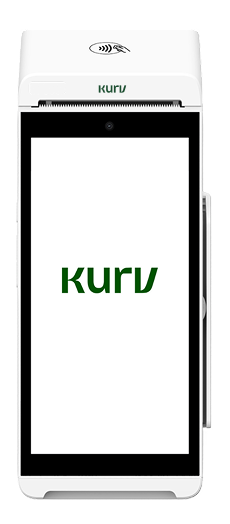
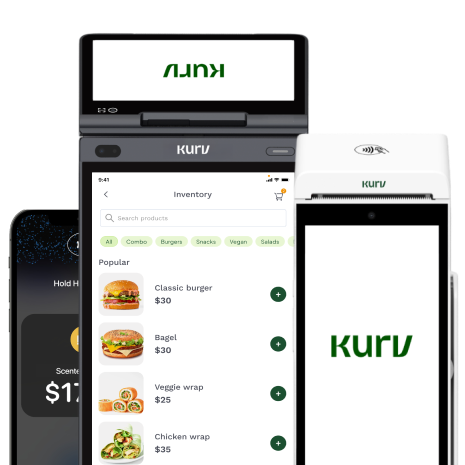
Kurv integrates with most existing forecourt setups and supports in-store terminals, so you can upgrade how you accept payments without replacing pump hardware. It’s definitely worth confirming compatibility with your current setup before making a bigger switch.
Explore Kurv for Gas Station Payment Processing
If your priority is modernizing payments without disrupting operations, Kurv is an ideal solution for your gas station payment processing. Kurv layers into your existing setup so you can upgrade how you accept payments without replacing everything at once.
Our key capabilities include:
- Payment processing for pay-at-the-pump and in-store or c-store transactions
- Integrates with most forecourt systems, no pump replacement required
- Retail-ready terminals for faster, modern in-store checkout (EMV, contactless payments)
- Supports fleet, commercial, and EBT payments
- 24/7/365 support from petroleum payment specialists
Ready to Grow Your Business?
Apply and start accepting payments within a day

Frequently Asked Questions
Do I have to replace my pump hardware to upgrade payments?
Not always. Many operators take an integration-first approach, keeping their existing forecourt equipment and upgrading the payments layer instead. This lets you add capabilities like EMV, contactless, or fleet acceptance without the cost and downtime of replacing pump equipment.
What are the must-have features in a gas station POS?
At a minimum, your POS should handle both sides of the business. That includes fuel management (prepay, pump control), a reliable UPC-based checkout system, workflows for restricted sales such as alcohol and tobacco, basic loyalty or promotions, and reporting on sales, inventory, and exceptions. If any of these are missing or clunky, it will show up in day-to-day operations.
How much does a gas station POS system cost?
Costs vary widely depending on your setup. Key drivers include the number of pumps and registers, whether you’re replacing or integrating with existing systems, hardware needs, and software or support fees. Some providers quote a few thousand dollars upfront, while others use subscription pricing.
What should I ask during a POS demo?
Focus on real workflows, not features. Ask the vendor to run a full checkout flow (fuel + in-store + age-restricted item), process a refund, and show shift close. Then have them demonstrate back-office tasks, such as inventory updates and reporting.
Do gas stations need 24/7 support?
If you operate late hours or 24/7, the answer is yes. When your POS or payments go down, you can’t process transactions, and losses can add up quickly. That’s why most gas station-focused providers emphasize round-the-clock support. Even for stores with limited hours, having access to after-hours support can prevent small issues from becoming bigger problems the next day.
Can a POS help with fleet cards and commercial payments?
Yes, but it depends on your setup. Fleet and commercial cards (like WEX or Voyager) often require specific integrations and support for enhanced data (such as Level II or III transaction details). Some POS and payment providers, like Kurv, support these payment types and can connect them to both pump and in-store transactions. Just confirm compatibility upfront, since not every system handles fleet payments the same way.


