







When it comes to consumer electronics, no device comes close to the popularity of smartphones. We use them in almost every part of our lives: communication, health and fitness, entertainment, and even payments.
That last part is particularly interesting, because paying with your phone has become the norm for millions of people. CapitalOne Shopping estimates the global mobile payment market to reach $121.3 billion in value by 2025, reflecting the rapid growth of mobile-first payment technologies. Its research also shows that digital wallets (a significant component of mobile payments) account for 53% of online purchases and 32% of point-of-sale transactions globally [1]CapitalOne Shopping. “Digital Wallet Statistics.” Accessed January 5, 2025. It’s important to note that these figures reflect market size and usage share, not the total dollar value of all transactions processed worldwide.
Mobile payments are fast, feel effortless, and are super convenient. So their popularity shouldn’t come as a surprise. For merchants who want to serve modern shoppers and stay competitive, accepting mobile payments is no longer optional—it’s a must.
This guide will cover the ins and outs of mobile payments, how they work, and how to accept them in your business.
Key Takeaways
- Mobile payments are more popular than ever, thanks to the increased use of smartphones and people’s growing preference for convenient shopping experiences.
- Mobile payments use secure technology, including tokenization, encryption, and often biometric authentication to protect payment data and authenticate transactions.
- Mobile payments come in different forms, including Tap to Pay, QR codes, peer-to-peer transactions, and more.
- Choosing the right payment provider to accept mobile payments is crucial. Factors to consider include hardware compatibility, transparent pricing, and robust security features.
What are Mobile Payments?
A mobile payment is a digital transaction facilitated using a mobile device, such as a smartphone or tablet, instead of cash or a physical card. A few key players make this work: the shopper, their device or mobile wallet, the card issuer, the payment processor, and the merchant.
Mobile payments show up across almost every channel. People use their phones to pay in stores, check out online, buy through apps, and even send money to friends (peer-to-peer).
For example, a customer shopping in a retail store can choose Tap to Pay, allowing them to complete the purchase using Apple Pay. In this instance, they wouldn’t need to whip out their physical wallet or credit card. They’d just hover their iPhone over the card reader to initiate and complete the payment.
How Mobile Payments Work
While mobile payments can be initiated in various ways, they typically follow a standard authorization process to complete a transaction.
Here’s the TL;DR: the customer chooses to pay with their phone, the device handles security and verifies they are the one making the purchase, and the payment networks move the transaction to the bank for approval.
A mobile payment is an effective payment method for both in-person and online transactions. Let’s take a closer look at what the process looks like for both channels.
In-Person or Contactless Payments
For transactions that take place in person (e.g., brick-and-mortar stores, restaurants), the customer would hold their mobile phone or smartwatch near the NFC-enabled contactless payment terminal, ensuring it’s just a few centimeters away from the device. This initiates the transaction, and the customer is prompted to verify the purchase using biometric scanning or their passcode. Once this is done, the issuing bank authorizes the transaction via the card networks.
Online or In-app Mobile Payments
For customers shopping online or via a mobile app, they’ll choose a mobile payment at checkout and select the appropriate mobile payment option (e.g., Apple Wallet, PayPal, etc.). They’ll authorize the transaction by either entering their passcode or using biometric authentication, eliminating the need to manually enter a credit card number. If they choose an option like PayPal, they’ll need to log in to their account by entering a username and password.
Core Technologies Powering Mobile Payments
Here are the key technologies behind mobile payments.
NFC (Near Field Communication)
NFC, which stands for Near Field Communication, is a technology that allows devices to securely transmit payment data over very short distances (typically just a few centimeters).
QR Codes (Quick Response Codes)
QR codes provide a straightforward method for accepting mobile payments without requiring specialized hardware. All customers need to do is scan a code with their phone, and they’ll be taken to a page or portal where they can complete the transaction.
Mobile Wallets
Apple Pay and Google Pay are examples of mobile payment services, also known as mobile wallets. They store payment credentials securely on devices or within a protected wallet environment, so customers don’t have to pull out a card when making a payment. Mobile wallets handle authentication, tokenization, and encryption behind the scenes.
Payment Gateways
Payment gateways facilitate mobile transactions by securely sending payment data from the merchant to the processor and issuing bank, then returning an approval or decline.
Tokenization
Tokenization replaces sensitive card data with a randomized token. That way, even if the data gets intercepted, the token wouldn’t have any real value. The actual card number stays protected by the wallet or payment provider.
Mobile POS (mPOS) Systems
mPOS systems turn phones and tablets into fully functional point-of-sale and payment terminals. For businesses looking to take payments on a phone, these solutions offer flexibility and mobility. To accept contactless mobile wallet payments, your software and hardware must support NFC technology.
Encryption (End-to-End / P2PE)
Encryption is the process of transforming cardholder data into an unreadable code, ensuring the data remains secure as it travels through the network. Point-to-point encryption is exceptionally secure because it encrypts the data from the moment it’s captured at the terminal until it reaches a safe, validated, decryption environment.
APIs (Application Programming Interfaces)
APIs connect mobile payments to the rest of a business’s systems. They allow payments to sync with apps, POS software, reporting tools, and customer records. For developers, APIs make it easier to build smooth, connected checkout experiences.
Biometric Authentication
Biometric authentication confirms the user’s identity at the device level. Examples of biometric authentication include face scans and fingerprints.
Types of Mobile Payments You Should Know
Mobile payments come in various forms and are facilitated by different devices. Here are the core types worth understanding, along with their functions.
Tap to Pay / NFC Mobile Payments
Tap to Pay utilizes near-field communication, allowing customers to hold their phone or watch near a terminal to complete a purchase. The device sends a token instead of a card number, which keeps card data protected.
NFC and Tap to Pay are ubiquitous in retail businesses. Many mobile card readers used in retail environments support NFC, enabling customers to use their mobile wallets at the checkout counter. So, rather than swiping or dipping their card, they can simply take out their phone, open their mobile wallet, and hover it over the payment terminal.
QR Payments
QR payments let customers scan a code with their phone to initiate a transaction. There are two types of QR codes that power mobile payments:
- Static codes, which remain the same and direct users to a fixed payment page.
- Dynamic codes, which change for each sale and include the exact amount.
QR codes are well-suited for food stalls, pop-ups, and other situations where contactless payments are desired without the need for additional hardware. Certain self-service transactions also lend themselves well to QR-based payments. For.
Text to Pay (SMS payments)
Text to Pay lets businesses send a payment link directly to a customer’s phone. The customer taps the link, reviews the amount, and pays using a credit or debit card or mobile wallet. This works well for invoices, appointments, and payments that happen outside a traditional checkout.
In-app Mobile Payments
In-app mobile payments occur when customers complete a purchase directly inside a mobile app. Depending on how the transaction is set up, they can choose a saved card or a mobile wallet as their payment method, authenticate the payment using a passcode or biometric verification, and then finalize the purchase.
Web-based Checkout
Web-based mobile payments occur when customers complete a purchase in their phone’s browser, rather than through an app. Checkouts are optimized for small screens, support saved cards and mobile wallets, and let customers authenticate payments with passcodes or biometrics.
Peer-to-Peer Payments (P2P)
Peer-to-peer payments are another way to accept payments on your phone. P2P transfers let people send money directly from one mobile user to another, typically powered by apps like Venmo and PayPal. Users launch the app, specify the amount they want to send to the other party, and initiate the payment.
Note that not all P2P payments use credit cards. Zelle, for example, links directly to checking accounts and still counts as a mobile, peer-to-peer transfer.r.
What are the Advantages Of Mobile Payments?
Accepting mobile payments can help streamline the checkout process and enhance the overall customer experience. Let’s take a closer look at the benefits you can expect from well-implemented mobile payment workflows.
Faster Checkout
- Mobile payments eliminate extra steps, enabling customers to complete their checkout quickly.
Increased Security
- Mobile payments have several layers of security, including tokenization, encryption, biometric authentication, and PCI DSS compliance.
Improved Customer Experience and Loyalty
- Mobile payments make shopping more convenient, thereby enhancing the overall customer experience. How easy you make the buying process directly impacts whether customers come back. Research by PwC found that nearly a third of consumers report stopping their shopping with a brand due to a poor in-store or online experience. [2] PwC. “The loyalty illusion: Why companies think they’re winning when customers are walking away.” Accessed January 5, 2025.
Flexibility Across Channels
- Mobile payments work seamlessly in-store, online, and on the go, allowing merchants to serve and sell to their customers wherever they are.
Lower Hardware Dependence
- Many mobile payment options reduce the need for traditional POS hardware, especially methods like Tap to Pay, QR codes, and Text to Pay.
What are the Disadvantages Of Mobile Payments?
While mobile payments offer significant upside, they also present challenges. Be sure to keep an eye out for these potential issues.
Dependence on Connectivity
- Mobile payments are entirely digital and rely on internet or cellular connectivity, along with electronic payment networks, to process transactions. If you or your customers face connectivity issues, transactions can slow down or fail.
Battery Life Constraints
- Since mobile payments require a functioning mobile device, both customers and merchants need to ensure that their devices are adequately charged at all times
Not Universal for All Customers
- Mobile payments are popular among younger generations, but older customers may be less familiar with mobile technology and still prefer to use traditional payment methods.
Compatibility & Integration Challenges
- Depending on your tech stack, you may find it challenging to connect software and solutions seamlessly. As such, choose providers that can integrate with the tools you’re already using.
Processing Fees Still Apply
- Mobile payments are still subject to standard card processing fees, including interchange and network costs, just like traditional credit and debit card transactions.
How Kurv Can Help with Mobile Payments
Kurv makes it simple to accept mobile payments anywhere you work. As a Kurv merchant, you’ll benefit from a quick setup process, flexible hardware, and top-notch customer support.
Here’s how to get set up.
- Tell us about your business and choose hardware that fits your needs.
- Fill out an online application form, review your pricing, and then digitally sign the application.
- Use Finicity for instant verification and KYC; no need to deal with complex paperwork.
- Many merchants receive approval quickly and can begin accepting payments shortly after onboarding.
- Log in to your merchant portal for reporting and support.
Hardware Options That Fit Your Workflow
Kurv supports multiple ways to take mobile payments:
- Tap to Pay on iPhone for food trucks, craft fairs, and on-the-go sales with no extra hardware.
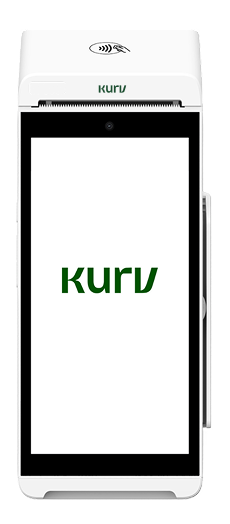
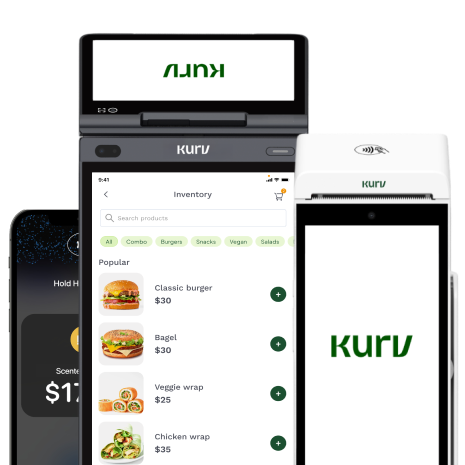
- Free handheld smart terminals, which are lightweight, wireless, and perfect for markets, mobile spas, or service calls.
- Portable all-in-one devices if you want inventory tools, digital receipts, and cash drawer connections.
Mobile Checkout That Meets Customers Where They Are
Kurv lets customers pay however they prefer, whether it’s Tap to Pay, QR, Text to Pay, or via emailed invoices. Checkout feels quick and familiar, so you spend less time managing payments and more time serving customers.
Learn more about Kurv’s mobile payment solutions or apply now to start accepting payments in 24 hours.
Frequently Asked Questions
Are mobile payments safe?
Yes, mobile payments are safe. In fact, mobile wallets such as Apple Pay and Google Pay are among the safest options. As stated previously, they use tokenization to replace your card number with a unique code, and then combine that with another security layer by requiring device authentication, like Face ID, Touch ID, or a passcode.
Are mobile payments replacing credit cards?
No, mobile payments aren’t replacing credit cards, because you still need a credit/debit card to make a mobile payment. However, mobile payments are transforming the way credit cards are used. Rather than having consumers pay with physical cards, mobile payments encourage people to use their mobile devices to make a purchase. That said, when someone pays with Apple Pay, Google Pay, or Samsung Pay, those transactions run through the same rails as a traditional card swipe or dip; Visa, Mastercard, Amex, and the issuing bank are all still involved.
Which business types commonly use mobile payments?
Mobile payments are most commonly used in businesses where speed and convenience are the priorities. Think: retail stores, restaurants and cafes, food trucks and pop-ups, as well as service-based businesses like salons and spas.
What fees are associated with mobile payment services?
Mobile payments, particularly those that involve credit cards, are subject to the same fees as traditional card payments. These include interchange fees, card network assessment fees, and payment processor markups. Depending on your setup, you might also pay additional hardware and POS fees.
Are NFC payments the same as mobile payments?
Mobile payments and NFC payments are not the same thing, but they are closely related. ‘Mobile payment’ is an umbrella term for payments made on mobile devices, while NFC payments are a subset of that. Aside from NFC, other methods that fall under mobile payments include QR code payments and payment links.
