







You’re set up for a busy day at your favorite craft fair — tables stacked high with beautiful handmade goods, customers milling around, a line starts to form… and someone wants to tap their credit card at checkout. But the signal at the venue is weak, and your setup might not hold up. This moment can make or break your sales.
In this guide, we’ll cover the top card reader picks for craft fairs by scenario, a quick checklist for what matters most, and a comparison framework so you can choose with confidence. Keep reading to find the best card reader for craft fairs to help you convert more customers at your next show!
Key Takeaways
- With most consumers now preferring card payments, every craft fair merchant should have a way to accept card payments on the go.
- Craft fair payment methods should include contactless payments to improve customer convenience and speed up checkout.
- The best card reader for your business depends on the scenario: outdoor markets, long events, fast checkout, or full POS features.
- It’s critical to match connectivity, battery life, and payment method support (chip, tap, wallets) to your booth’s selling environment.
Best Card Readers for Craft Fairs: At-a-Glance
Below is a quick comparison of top credit card readers for craft fairs, so you can easily see how they stack up on cost, fees, and ideal use cases. Note that pricing is current as of 2026 and subject to change.
| Model | Hardware Cost | Card Present Fee | CNP (Keyed/Online) Fee | Best For |
| Clover Go | ~$199 | ~2.3%–2.6% + 10¢ (varies by reseller) | 3.5% + 10¢ | Fast Checkout |
| Helcim Card Reader + Interchange + Pricing | $199 | Custom rates | Custom rates | Cost‑Effective Processing |
| PayPal POS Card Reader | $29 for the first reader (new users); $79 for additional units | 2.29% + $0.09 (flat rate for all major cards) | 3.49% + $0.09 | Tap to Pay + Payment Flexibility |
| Square Reader (for Contactless and Chip OR Magstripe) | $0 – $59 | 2.6% + 15¢ | 2.9% – 3.3% + 30¢ | Top-Rated / Best Overall |
| Stripe Reader M2 | ~$59 | 2.7% + 5¢ | 2.9% + 30¢ | Reliability and Durability |
| SumUp Plus | $54 | 2.6% + 10¢ | 3.5% + 15¢ | Outdoor Craft Fairs |
| SumUp Solo | $99 | 2.6% + 10¢ | 3.5% + 15¢ | POS Features |
Side-by-Side of Essential Craft Fair Card Reader Features
The comparison below highlights the key hardware and functionality differences among leading mobile card readers for craft fairs, so you can see at a glance how they perform in real-world use.
| Model | Integrated POS or Standalone? | EMV + Tap (NFC) | OS / App Dependency | Connectivity | Receipt Printing |
| Clover Go | Mobile Reader (App-Dependent) | Yes | iOS / Android App | Bluetooth | Digital (Email/SMS) |
| Helcim Card Reader + Interchange‑Plus Pricing | Integrated POS | Yes | iOS / Android App | Bluetooth | Digital (Email) |
| PayPal POS Card Reader | Integrated POS | Yes | iOS or Android | Bluetooth | Digital (Email/SMS) |
| Square Reader (for Contactless and Chip OR Magstripe) | Integrated POS | Yes | iOS / Android App | Bluetooth | Digital (Email/SMS) |
| Stripe Reader M2 | Mobile Reader (SDK/App-Dependent) | Yes | App / API-driven | Bluetooth | Digital |
| SumUp Plus | Mobile Reader (App-Dependent) | Yes | iOS / Android App | Bluetooth | Digital (Email/SMS) |
| SumUp Solo | Integrated POS | Yes | iOS / Android App | Bluetooth | Digital and Print (with SumUp Solo printer attachment) |
Best Card Reader for Craft Fairs: Our 2026 Top Picks
Here are the best credit card readers for craft shows, broken down by common vendor scenarios or requirements:
Top‑Rated / Best Overall for Craft Fairs: Square Contactless + Chip Reader
The Square Contactless + Chip Reader is the best overall for simplicity and reliability. It offers convenience, payment flexibility, and a super-intuitive user interface that makes checkout simple for merchants and customers.
| Pros | Cons |
| Easy to use | Fees are built into per‑transaction rates |
| Accepts tap/chip and contactless payments | The battery needs to be charged |
| Integrates with the Square POS app |
Best for Outdoor Craft Markets: SumUp Plus
The SumUp Plus portable card reader offers extended battery life for outdoor craft markets, enabling over 500 transactions per charge. While its durable hardware isn’t inherently waterproof, cases are available to weatherproof the device for outdoor use.
| Pros | Cons |
| Simple interface and durable | Requires a phone for connectivity |
| 500+ transactions per charge | Not waterproof on its own |
Best for Fast Checkout: Clover Go Reader
The Clover Go Reader is a slim Bluetooth reader that easily pairs with your phone/app. It’s perfect for busy events where lines form quickly. Fast checkout features make it easy to serve multiple customers without sacrificing convenience, and with fewer failed transactions.
| Pros | Cons |
| Fast pairing | Requires your phone to be nearby |
| Supports contactless & chip payments | Fewer features than more advanced readers or larger terminals |
| Easy for long lines |
Best for Tap to Pay + Payment Flexibility: PayPal POS
The PayPal POS is affordable, lightweight, and compatible with all major contactless payment methods. It is perfect for a vendor that sees high mobile wallet usage and wants to integrate with PayPal’s eCommerce platform.
| Pros | Cons |
| Accepts different payment types (tap, chip) as well as Apple/Google/Samsung Pay mobile wallets | Processing fees still apply |
| No contract fees | Basic feature set |
| Connectable to PayPal’s eCommerce tools |
Best for Cost‑Effective Processing: Helcim Card Reader
The Helcim Card Reader provides access to Interchange Plus pricing, making it ideal for merchants with an established processing history and for vendors seeking to minimize transaction costs.
| Pros | Cons |
| Transparent, low rates | Requires a merchant account setup |
| Great for growing sellers |
Best for Reliability and Durability: Stripe Reader M2
The Stripe Reader M2 is a compact, screenless Bluetooth reader built for sellers who want simple, durable hardware at an affordable price. Especially for sellers already using Stripe for online sales who want a lightweight reader that connects their in-person and eCommerce payments in one place. The long battery life and simple hardware make it well-suited to full-day events where reliability matters more than features.
| Pros | Cons |
| 28-hour battery life | Relies on your phone or tablet to display transactions |
| Rugged screenless design with fewer parts to fail | Screenless |
| End-to-end encryption | Tipping is on-receipt only |
| Offline mode | Not built for high-volume checkout |
| No monthly fees |
Best When You Need POS Features: SumUp Solo
The SumUp Solo provides full card reader functionality without any need for a separate mobile device. It suits sellers who want a self-contained, POS-like setup that doesn’t depend on a smartphone. It’s particularly useful at events where juggling a phone and a reader creates friction, or where Bluetooth reliability is a concern. Additionally, it’s great for merchants who have outgrown simple payments and need the same POS workflows as a more complex terminal.
| Pros | Cons |
| Standalone device with built-in connectivity | Flat-rate pricing is less competitive at higher volumes |
| No phone or Bluetooth required | Receipt printing requires a separate printer bundle |
| No monthly fees or minimums |
How to Choose a Craft Fair Card Reader
Choosing the right reader comes down to a few simple checks:
Match Connectivity to Your Venue
Wi‑Fi, Bluetooth, and built‑in mobile data (SIM) matter at fairs with spotty internet. Where Wi‑Fi isn’t reliable, consider devices with LTE or use a phone hotspot as a backup.
Some payment providers offer “offline payments,” which store transactions locally until connectivity returns. But if a card is declined once the device reconnects, the payment won’t go through, and you may have already provided the product or service. For craft shows, choose a processor that can pre-authorize payments or alert you immediately to declines, so you never lose revenue.
Match Battery Life to Event Length
Battery life becomes critical during long craft fair days. The last thing you want is a reader dying mid-queue with customers waiting. Many modern mobile readers are designed to last a full day on a single charge. But actual battery performance depends on factors like transaction volume, Bluetooth usage, and whether the device is also printing receipts. If battery life is a known concern, check the manufacturer’s quoted figures and look for readers with replaceable batteries, which give you an easy backup without waiting for a recharge.
That said, it’s always worth packing a portable power bank and spare cables regardless of how confident you are in your reader’s battery. Power banks are inexpensive insurance against unexpected drain. Having the right cable on hand means you’re not scrambling when you need to top up between customers.
Verify Payment Method Compatibility
Payment flexibility is now essential for craft fair merchants. Research suggests that 70% of shoppers prioritize the payment method when deciding where to shop. This makes it crucial to verify which payment methods your new card reader supports. Popular options at craft fairs include standard credit card payments (chip and PIN), Tap to Pay card payments, and contactless mobile wallet payments.
Contactless payments should be prioritized at craft fairs. They’re significantly faster than chip and PIN, which adds up quickly when you have a queue of customers. The fewer seconds spent per transaction, the more sales you can turn over during peak periods. And with 51% of US consumers now using contactless payments, you can’t afford to avoid this payment method.
Choose Between a Reader or a POS System
For most sellers, a mobile card reader paired with a smartphone is a perfectly capable setup. It’s affordable, portable, and easy to get started with. But it comes with dependencies that can create friction at a busy craft fair. Your battery is shared between the reader and everything running in the background, and a notification mid-transaction can ruin the customer experience.
A full POS system, on the other hand, is generally overkill for a craft fair booth. These setups are designed for fixed retail environments with inventory management, staff accounts, and hardware that isn’t built to be packed into a bag and set up on a folding table.
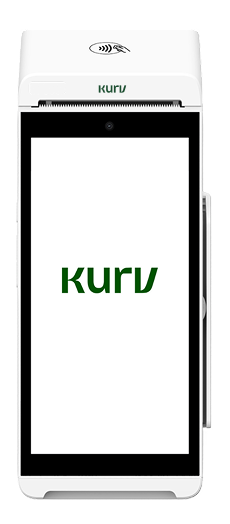
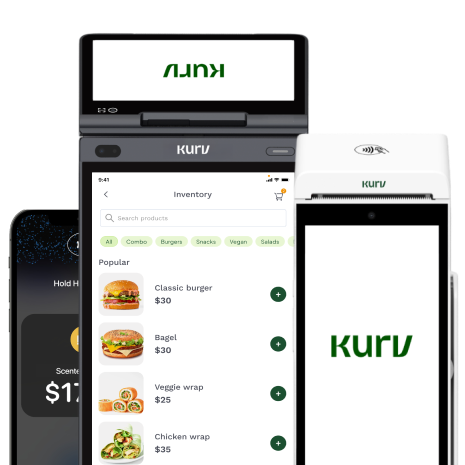
For craft fair vendors who want the capabilities of a POS system with the portability of a card reader, the middle ground is a handheld smart terminal: a dedicated device with its own screen, battery, and connectivity that doesn’t rely on your phone. This is worth considering if you’re doing regular events, handling high transaction volumes, or simply want a phone-free setup. Some providers, including Kurv, offer smart terminals alongside more flexible options like Tap to Pay and QR codes, so you can choose the setup that fits how you sell.
The Real Cost of Craft Fair Credit Card Processing
The real cost of credit card processing for craft fair vendors is often much different from the advertised rate. Here’s a simple comparison framework you can use when evaluating the best credit card reader for small businesses like yours:
| Device Cost | One-time upfront payments for hardware |
| Per Transaction Fees | Per-transaction fees are typically structured in one of two ways: a straight percentage of the sale amount, or a small fixed fee plus a percentage. |
| Monthly Fees | Monthly fees are a fixed recurring cost regardless of how much you sell; however, some providers will waive them once your transaction volume crosses a set threshold |
| Add-Ons | There may be additional charges for receipts, data exports, CRMs, inventory tracking, and other premium features. |
| Payout Timing | Most payment providers offer payouts within 1-3 days of a transaction; anything more may impact cash flow. |
- Calculate Total Cost Per Transaction: To find your true per-transaction cost of credit card processing, add up all your fixed monthly costs — hardware amortized over time, monthly fees, and any add-ons — divide by your average transaction volume, then add your per-transaction fee. This gives you a like-for-like figure to compare providers, since a lower transaction rate doesn’t always mean a lower overall cost.
- Identify Hidden Fee Structures: A low advertised transaction rate can look attractive until you factor in monthly minimums, account fees, PCI compliance charges, or the cost of next-day payouts that other providers include as standard. Before committing to any provider, read the full fee breakdown rather than the advertised per-transaction rate.
Reduce Checkout Friction with the Right Payment Options
Support contactless and tap payments
- Contactless payments are no longer a nice-to-have at craft fairs — customers expect them. And those who can’t tap will often walk away rather than wait to insert a card. Faster transactions mean shorter queues, which directly affects how many sales you can turn over during peak periods. Contactless is now the most critical payment method at craft fairs.
Enable mobile wallet acceptance
- Mobile wallets like Apple Pay and Google Pay are expected at craft fairs, as customers want to tap and go—particularly younger shoppers who may not carry a physical card at all. With Kurv Tap to Pay, you can turn any NFC-enabled phone into a secure checkout and accept contactless payments without extra hardware, helping to keep lines moving.
Keep cash for backup
- Despite the shift to digital payments, some customers still prefer cash, and a reader outage or connectivity issue can leave you unable to accept card payments. A simple cash box costs nothing to run and ensures you never have to turn a sale away because of a technical issue.
How to Set Up a Card Reader for Quick Transactions at Craft Events
- Plan primary and backup connectivity: Connectivity issues are one of the most common causes of failed transactions at events. It’s worth testing your Wi-Fi or hotspot signal at your specific booth spot before the day begins. Coverage can vary significantly across a venue. Have a mobile hotspot as a fallback if the event Wi-Fi is unreliable, and know in advance whether your reader supports offline mode in case both options fail.
- Disable unnecessary prompts: Every extra screen your customer has to navigate slows down checkout. The most efficient way to accept credit cards at a craft fair is to turn off unnecessary receipt options, tipping screens, and signature prompts.
- Prepare your power backup kit: If you want to accept credit cards at craft shows without running out of battery, charge everything the night before. And keep a backup charger in a fixed spot so it’s easy to reach without disrupting the flow of your booth.
- Configure quick-sale product buttons: If you sell items at fixed price points, quick-sale buttons let you process transactions in a few taps rather than manually entering amounts each time. This reduces errors, speeds up checkout, and keeps the experience feeling polished rather than improvised.
- Optimize booth layout for checkout flow: The physical layout of your payment area directly impacts your craft fair credit card processing. Keep the payment terminal accessible, face it toward the customer where possible, and ensure there’s enough clear space that paying doesn’t feel like an afterthought.
- Enable tap as the default payment method: This means customers can pay as soon as the terminal is ready, without waiting for a prompt or being asked to insert their card. It also removes hesitation for mobile wallet users, who may not realize your business accepts tap payments unless the device is clearly ready to receive it. With contactless payment value expected to double by 2030, this payment method will only become more significant.
Final Thoughts
Mobile card readers and wireless smart terminals help you accept mobile payments quickly and keep craft fair sales moving. If you want a portable setup that’s built for on‑the‑go selling, Kurv’s mobile payment solutions may be right for you. Sometimes, a standard card reader doesn’t offer enough functionality, so a handheld smart terminal can provide a more complete, all-in-one setup for selling on the go. Regardless of what you need, Kurv offers flexible options that adapt to how and where you sell.
Ready to Grow Your Business?
Apply and start accepting payments within a day

Frequently Asked Questions
What is the best payment method for craft fairs?
The best payment method for craft fairs is mobile payments. This payment method allows your business to accept payments from customers using credit cards or mobile wallets. Not only do they improve customer convenience, but they also speed up the checkout process, enabling you to serve more paying visitors in less time.
What is the best way to take card payments at craft fairs?
Due to the increased use of credit cards in recent years, the best way to accept credit cards at a craft fair is with a credit card reader or a handheld smart terminal. With credit card readers and wireless terminals, you don’t need a full-scale POS system to process card payments. Instead, you can benefit from Wi-Fi or SIM-based connectivity to accept payments for products, regardless of where your fair is located.
How do I choose a card reader that works well with mobile payment apps?
Look for two things: NFC support and software compatibility. An NFC-enabled reader accepts tap-to-pay cards, Apple Pay, and Google Pay. Bluetooth connectivity lets the reader pair wirelessly with a mobile payment app, which is ideal for merchants on the go.
Do I need Wi‑Fi to take card payments at a craft show?
Whether you need Wi-Fi depends on the payment device you use. While some card readers connect only via Wi-Fi, others are compatible with SIM cards. Versatility is key to craft show credit card processing.
